
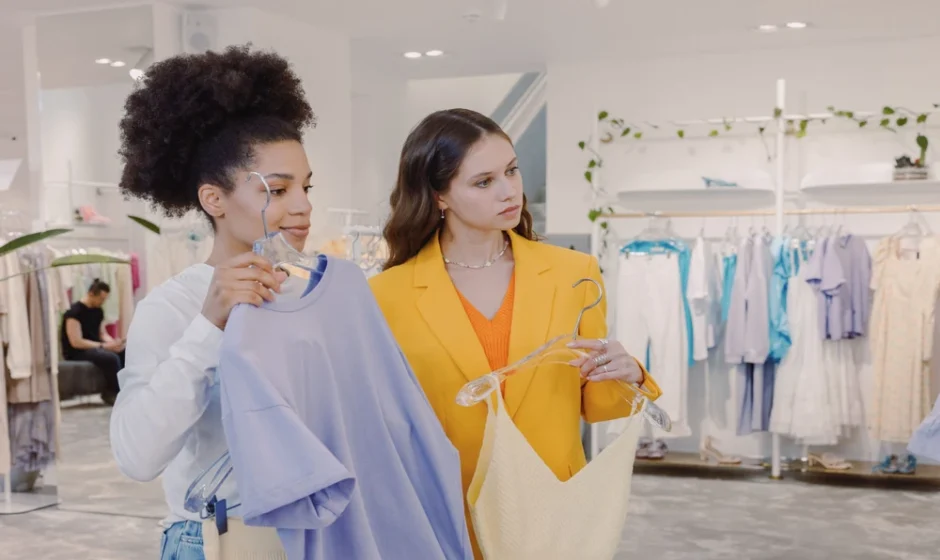

Your professional image is more fragile than most people realize. A colleague notices your shopping bag from a trend you weren’t ready to commit to publicly. Someone screenshots your public wish list. Small things, but they add up to information you never meant to share. This is why a professional dating services option exists separate from public apps, and it’s the same reason many executives choose a private stylist over public shopping and try-on culture.
The visibility trap nobody discusses
Retail culture runs on one principle: visibility equals relevance. Try-on hauls, public wish lists, tagged posts, the more visible your shopping, the more “engaged” you appear. Wrong audience for executives, founders, and high-profile professionals. Visibility here is a liability, not an asset. Colleagues see it. Clients see it. Competitors see it.
What exposure actually costs
The damage isn’t always obvious. A client notices a public shopping post during a busy quarter and quietly reassesses your priorities. A competitor notices you experimenting with a new personal brand and reads intent into it. A business partner sees a wardrobe change and makes assumptions. These small signals accumulate into a changed perception that no one says out loud but everyone registers.
Why discretion is strategy, not vanity
Accomplished professionals keep their styling private not out of vanity, but out of strategy. Information is influence. When you control who sees your evolving image, you control the narrative around it. Public shopping and try-on culture hand that control away.
How private styling works differently
A private stylist works the way a professional dating services model works for confidential daters, quietly, discreetly, and on your terms. Your preferences, your fittings, and your evolving wardrobe stay between you and your stylist. Nothing gets posted, tagged, or shared unless you choose to share it.
The freedom of controlled image
When your styling process is private, you’re actually freer with it:
- Free to experiment without commentary
- Free to change direction without a public record
- Free to build a new image at your own pace
- Free to make style choices without explaining them to anyone
The assumption that everyone wants public, convenient shopping misses an entire audience, people whose professional standing depends on controlling their own image. For them, a private stylist isn’t a luxury. It’s simply how image management should work.
What discretion looks like day to day
In practice, discretion is less dramatic than it sounds. It might mean fittings scheduled outside typical office hours, deliveries that arrive without branded packaging, or simply not posting a single piece of a new wardrobe until it’s fully built and intentional rather than shown off item by item. It might mean working with a stylist who understands that a client’s job requires a specific kind of restraint publicly, even while their personal style is far bolder in private.
None of this is about hiding fashion sense. It’s about choosing when and how it becomes visible, on the client’s terms rather than an app’s engagement metrics. For someone whose every public move gets read for meaning, that level of control isn’t excessive. It’s simply what professional image management requires once the stakes are high enough to matter.
This is also why confidentiality agreements have become standard practice among higher-end styling services, not as a formality, but as an actual operating principle. Clients are told upfront who sees their information, how fittings are scheduled discreetly, and what happens to their data if the relationship ends. That clarity is itself part of the value being purchased.